
Alter artist
Pietro Desirò returns with more alters
01 November 2026
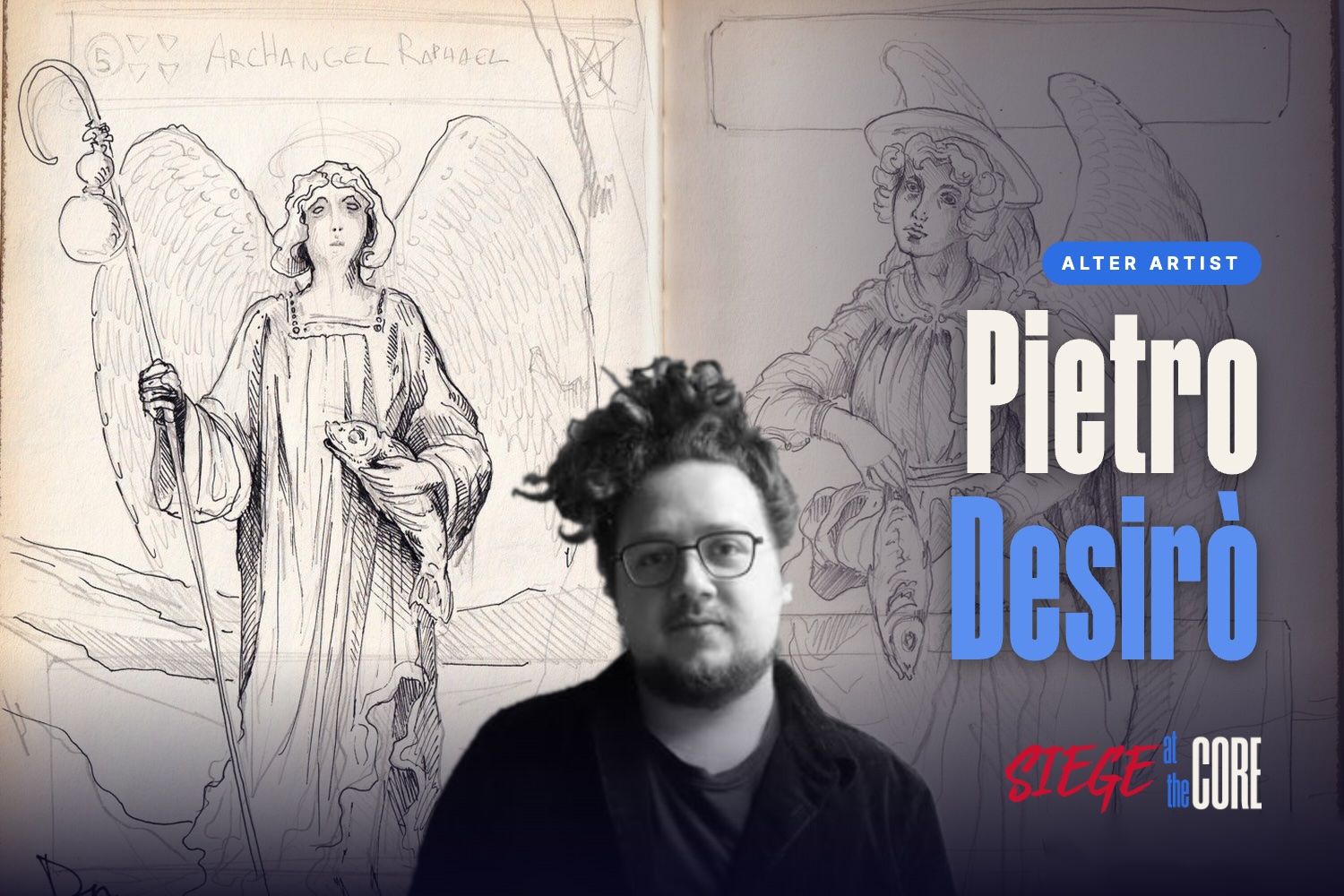
The past two editions of Siege at the Core have had beautiful alters by Pietro, and this year is no different. He is back at Quartier Papier in Zaventem all weekend, from Friday December 4 to Sunday December 6, and he is bringing his art with him once more. It is great to have Pietro with us again, and we love to see him grow as an artist.
The man behind the brushstrokes
Get to know Pietro better: a short introduction and his first experiences with Sorcery.
How would you introduce yourself to a room of players who have never met you?
I’m a TCG artist; I make Sorcery alters and am a featured artist for Shard Bugs TCG. I’m also an avid Sorcery player and part of Ordinary Mortals, a group of Italian sorcerers creating content and building community across Italy. If you join our Discord, you might find me painting alters or enjoying a game of Sorcery!
What got you into Sorcery in the first place, and what made it stick?
It was love at first sight.
I was coming out of a period of fatigue with MTG. I’ve always loved deck building, so with every new Magic set, I would brew different Commander decks. But somewhere along the way, I’d lost the emotional connection to the game. I wasn’t even collecting anymore. It had become little more than a mental exercise in deck building, and with the constant bombardment of new cards, you couldn’t possibly test all those ideas you came up with.
Then, somehow, YouTube’s fabulous algorithm recommended a video of the guys from Magic Maze, a local shop just a town over, playing a demo with the Alpha precon. I was mesmerised by that gameplay and the fresh yet nostalgic art style. I was instantly hooked.
It was right around that time that Beta pre-orders went live, and so began the long wait for its release. It was a weird but wonderful feeling, one I hadn’t experienced in a long time: that sense of anticipation for something truly special and unique.
And here we are.
What is your favourite Sorcery card?
Ooooh, this is the kind of question… my answer changes all the time!
Earthquake comes to mind as one of the cards that really made me appreciate the complexity and depth of Sorcery.
These days, I enjoy playing Dodge Roll quite a bit. Your opponent never sees it coming, and the look of despair and wonder on their face when you play it is priceless. Having a card like that in hand opens up so many interesting strategic possibilities. I wish we had a few more cards along those lines; I feel like there’s still a lot of unexplored design space there.
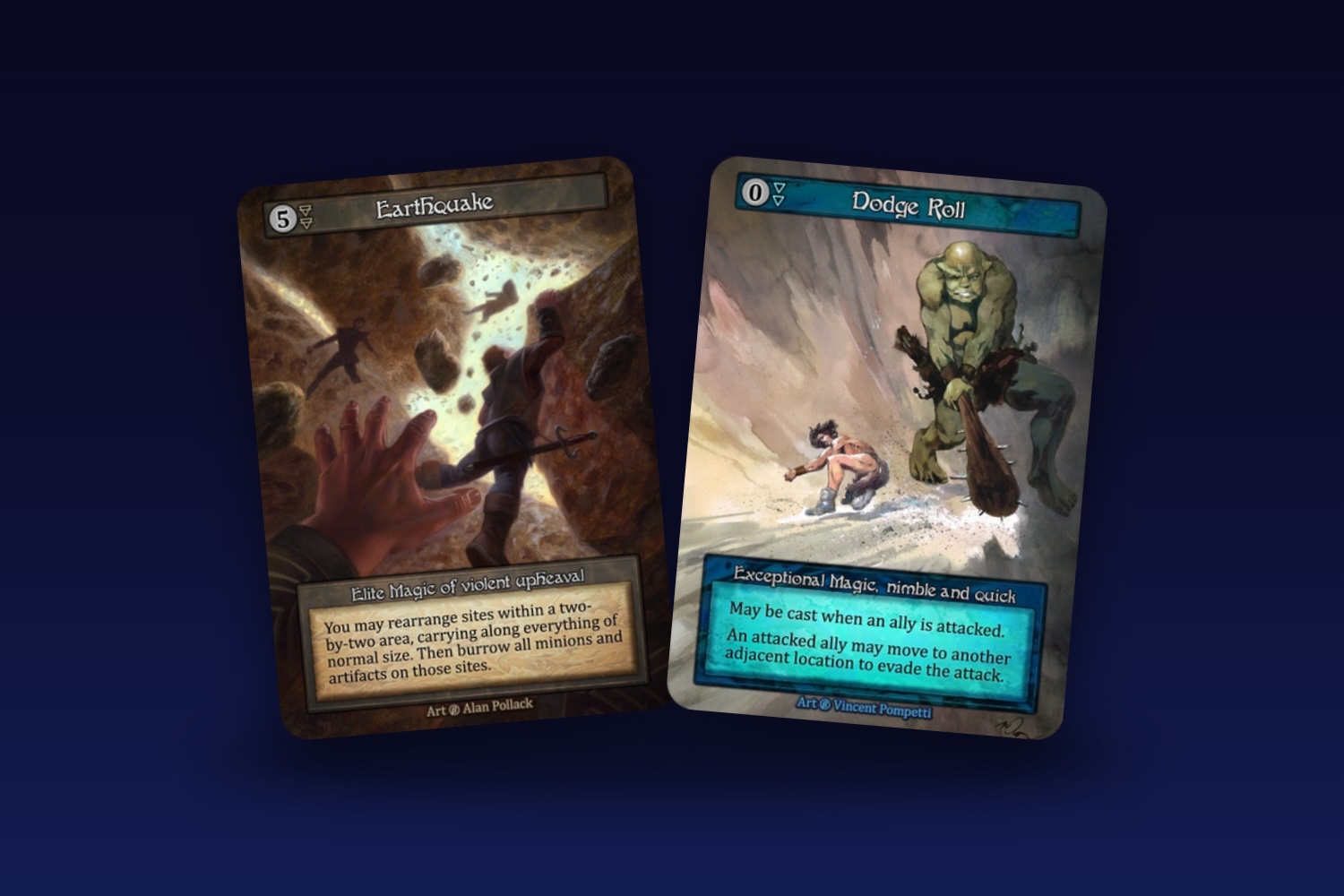
Earthquake illustrated by Alan Pollack and Dodge Roll illustrated by Vincent Pompetti, some of Pietro’s favourite cards.
Who is your favourite Sorcery artist?
That’s an even harder question to answer. I think the beauty of Sorcery lies in the individuality and freedom of expression of each artist. The cadence at which new products are released also gives us the opportunity to connect with different artworks over time, each one bringing something new to discover.
There are so many possibilities to choose from, but I think I have to go with Drew Tucker. Every set surprises me, and seeing what he comes up with next is always a delight. Just the other day, I watched the latest artist spotlight video EC made about him. It was lovely to hear him talk about his work and watch him paint the Cave Troll. If you haven’t seen it yet, you have to watch it!
What is your most memorable Sorcery moment, either in a game or at an event?
Too many to count! From the early days of Rolling Boulders to that game with Vivien where I drew 12 cards in a single turn, or the time I exploded Roots of Yggdrasil twice in one game, Sorcery keeps creating memorable moments full of stories to tell.
Attending events has been an incredible experience, and looking back at the first Siege always makes me smile. It was the event that made me realise these were my people, and this was where I wanted to be. It felt like the beginning of something bigger, but also the start of many friendships. It was also the first of many adventures with my trusted friend and sparring partner, Marco Riggio, who ended up taking home one of the alters I created for the event.
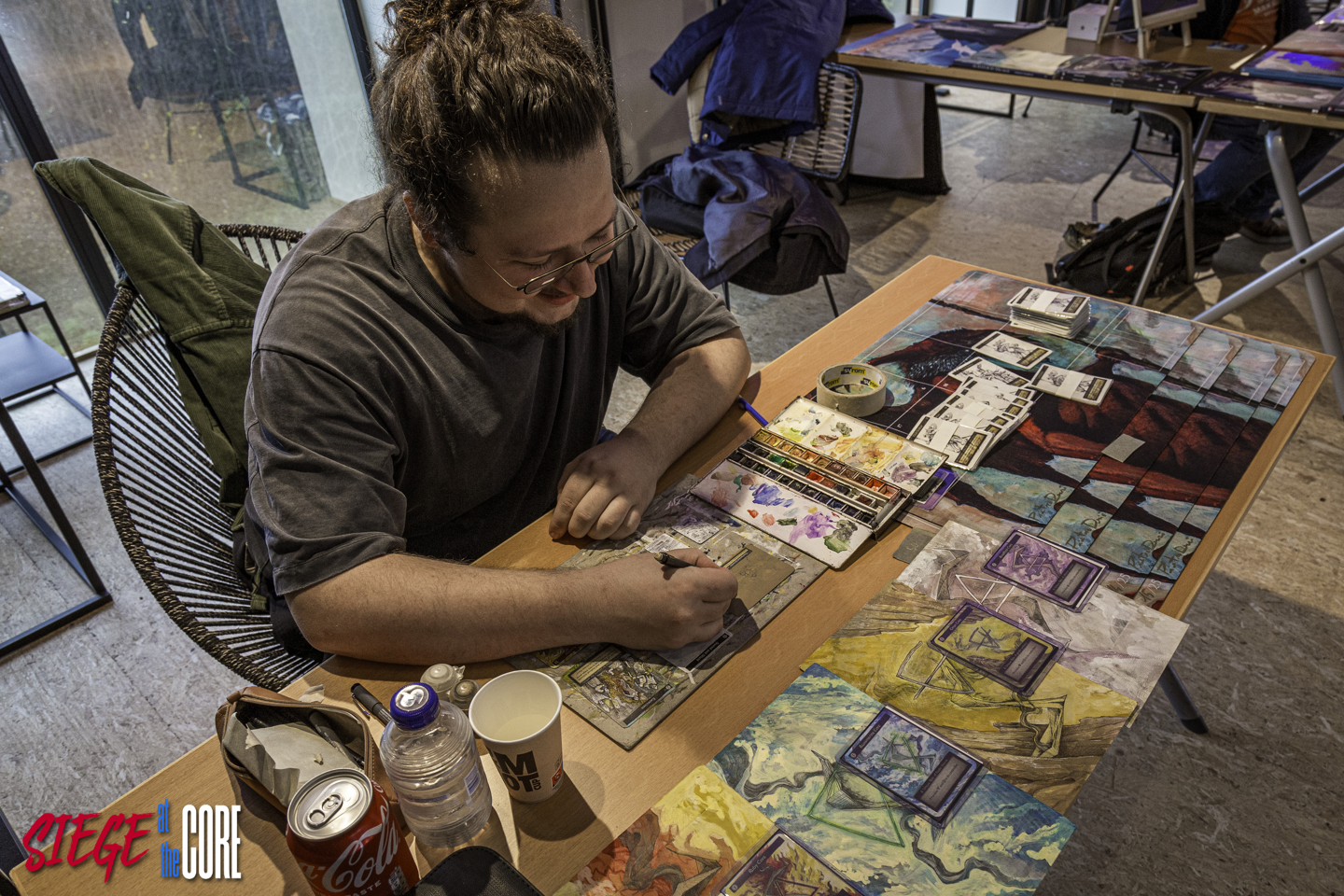
Pietro painting at his booth during Siege at the Core 2024.
The art of altering
Every artist has their own style, and Pietro is no exception. We dive deeper into how he got started, his modus operandi, and his ambitions for the future.
What got you into alters?
Sorcery got me into alters, but it also introduced me to the world of TCGs and ended up changing my career quite drastically. Starting to make alters on Sorcery cards felt like a very natural step. There’s something about the emotional connection you develop with this game, both through playing it and just holding the cards in your hands, that makes you want to spend endless hours working on these tiny pieces, stroke by stroke, bringing your own vision to them.
How would you describe your art style?
My background and the roots of my artistic education are in printmaking.
I moved into abstraction and the study of mark-making quite early on. I’ve always been fascinated by how much you can express with something as simple as a tiny point. There’s a sort of puzzle in figuring out how to convey different textures, subjects, and ideas without relying on colour. Drawing has always felt like an adventure to me, a process of exploration where every mark leaves something distinct behind.
Black and white have always been at the core of that fascination.
Of course, style needs to evolve and adapt depending on the work at hand. It’s not that I wasn’t painting before, but making alters pushed me to learn how to paint more traditionally. It forced me to find a connection between the drawing side of me and the painterly side, and to figure out how the two could work together.
What are your favourite subjects to paint?
Short answer: characters and creatures!
I don’t do them very often because they’re extremely time-consuming, but I love working on convoluted scenes packed with characters. I enjoy creating these little worlds where different moments in time unfold all at once, with countless stories hidden in the details. A bit of a Where’s Waldo kind of thing, where there’s always something new to discover.
How does altering differ from other art forms?
It’s a completely different thing. The size and the support are major constraints. Constantly cleaning the surface and trying to keep the paint as flat as possible, with as little physical painterly texture, forces you to approach the work differently than you would on a larger scale. I think it’s more of a physical and technical challenge than anything else.
What are the possibilities and limitations?
The first limitation is the support itself. It’s a frustrating type of paper that doesn’t really want to be painted on. Working on such a tiny space is where the possibilities lie: in the challenge and the fun of working on such a tiny scale and pushing its boundaries as far as possible.
What is your favourite part of the process?
There is a whole phase in my workflow where I work in monochrome, and I’m just figuring out shapes and the subject at hand. That morphing moment where, before, there is nothing and then something emerges from it fascinates me.
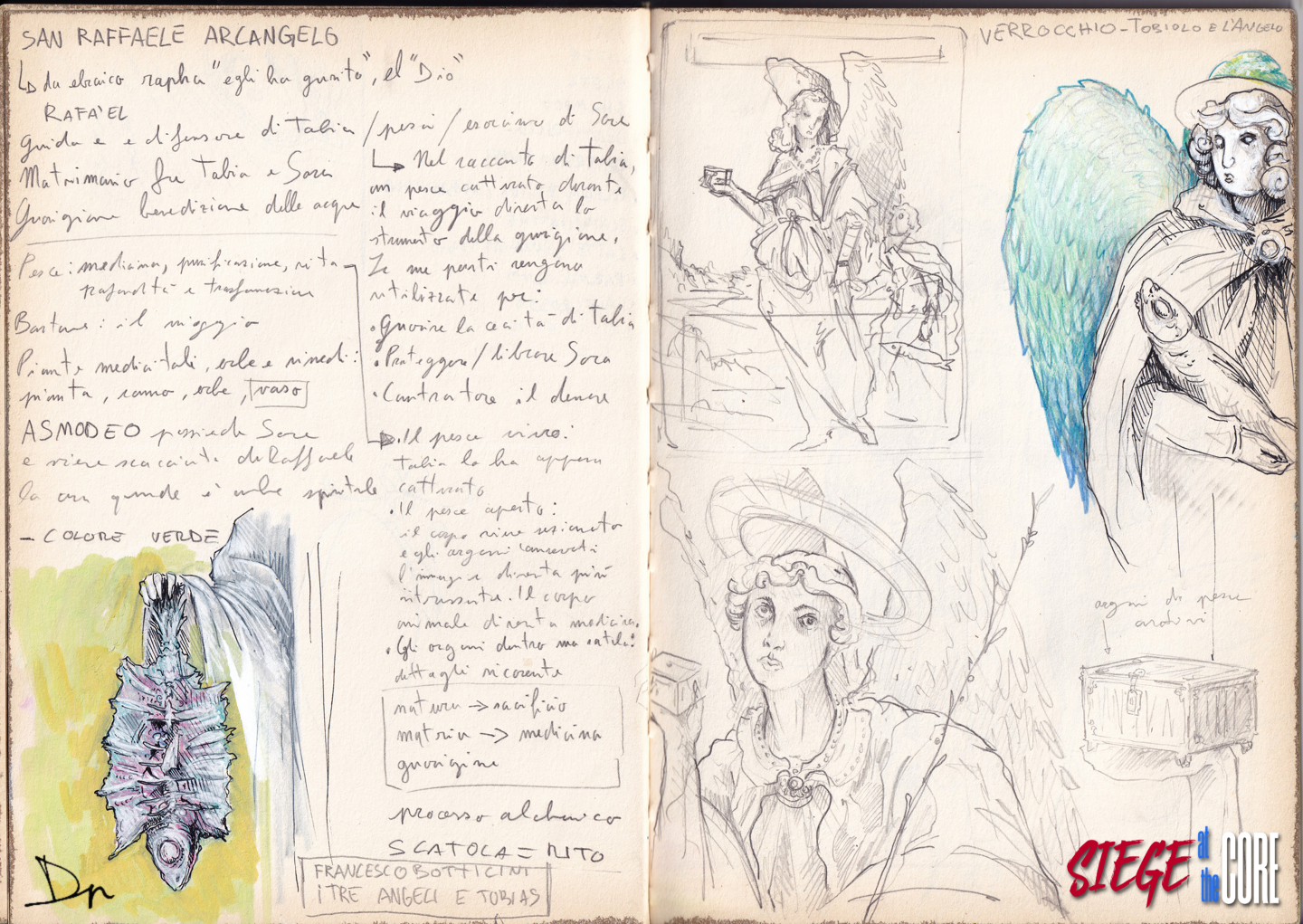
Two pages of Pietro’s sketchbook that showcase the first steps of his workflow.
Where would you recommend people to start if they want to try out altering for themselves?
I’d say just dive into it, be patient, and give yourself time to figure out what works for you. It takes time to understand the practice and develop your own approach. Be bold, experiment, and don’t be afraid to try new things.
There are so many different techniques and approaches to making alters nowadays, so there’s plenty of room to find your own way.
Do you have any Sorcery ambitions beyond altering cards?
Simply put, I’d love to have my work featured in a future Sorcery set.
This game has changed my life in ways I could never have imagined. It got me into alters and eventually led me to become a TCG artist for other games. Being able to contribute to a set as an artist, giving something back to a game that has given me so much, would truly be a dream come true.
Pietro Desirò and Siege at the Core
Pietro has been with us since the beginning and has greatly enhanced the prize pools with his stunning alters. Let us see what he is planning this year.
What will you bring to Siege at the Core to fill your table?
Everything is still in production, so I can’t share too many details just yet, as things are taking shape!
With the Gothic era coming to an end, the token pack I created when the set was released will need to be retired. I still have a few in stock, so this will most likely be your last chance to get them!
A new set means new mechanics, and new mechanics mean new tokens! So, of course, I’ll have some tokens for your Traps.
A new minion pack might take a little longer. I want to get a better feel for the new set before coming up with it. But there will definitely be new utility packs! I’ve been playing a lot of Wildfire lately and realised I’ve never made a Burn token. And with Frost Mage hopefully freezing all our minions, you might want to stock up on Disable tokens!
I’m also planning a new edition of playmat. I just need to decide which artwork to print. It might be the painting from my Rubble token, or another piece you can find on my Instagram called Pending Bloom.
And, of course, there will be alters! I might even have a few crazy ones…
Two years ago you altered the four Cores as prize support for the winners. What was your inspiration behind the designs?
A bit of a love-hate relationship with those Cores. I love the concept, but I’m not entirely happy with the execution.
I’m very critical of my own work, sometimes to my own detriment. I tend to move on quickly, always looking at the next piece and reassessing the previous ones through a different lens. Those were the first expensive, important cards I had the chance to work on, and they were going to be prize support for an international event that was shaping up to be something really special. The pressure was on!
When I started thinking about the Cores, drawing a parallel with Magic’s original Mox was inevitable. I believe their iconic status comes from their ability to evoke mysticism and primordial power beyond the game itself. A single precious stone against an abstract background suggests an entire universe without showing it. Coming from a background in abstraction, I wanted to push that idea further by removing even the physical aspect of the jewel. Looking back, I think I was too timid in my approach, and perhaps it was still too early for me to tackle the concept that way. As I said before, understanding the alter medium takes time. I’d love the chance to reinterpret that idea today.
But the story actually begins a little earlier, before I even started talking with Niek about the first Siege at the Core. A few months before, EC organised a card design contest on Facebook, for which I created two paintings called Acqua Rite and Fire Rite. They were part of a cycle of ridiculously cheap, powerful ramp spells, especially back when the Interact with the Realm concept didn’t exist yet. Combined with Philosopher’s Stone, they could do some nasty things!
Those two paintings became the inspiration for the Cores.
But even that isn’t the whole story. Coming from printmaking, you can imagine how many test prints accumulate over the years. Those two paintings were made on test prints left over from a piece I created as a wedding gift for my cousin years ago. So there’s a little extra love baked into them from the very beginning.
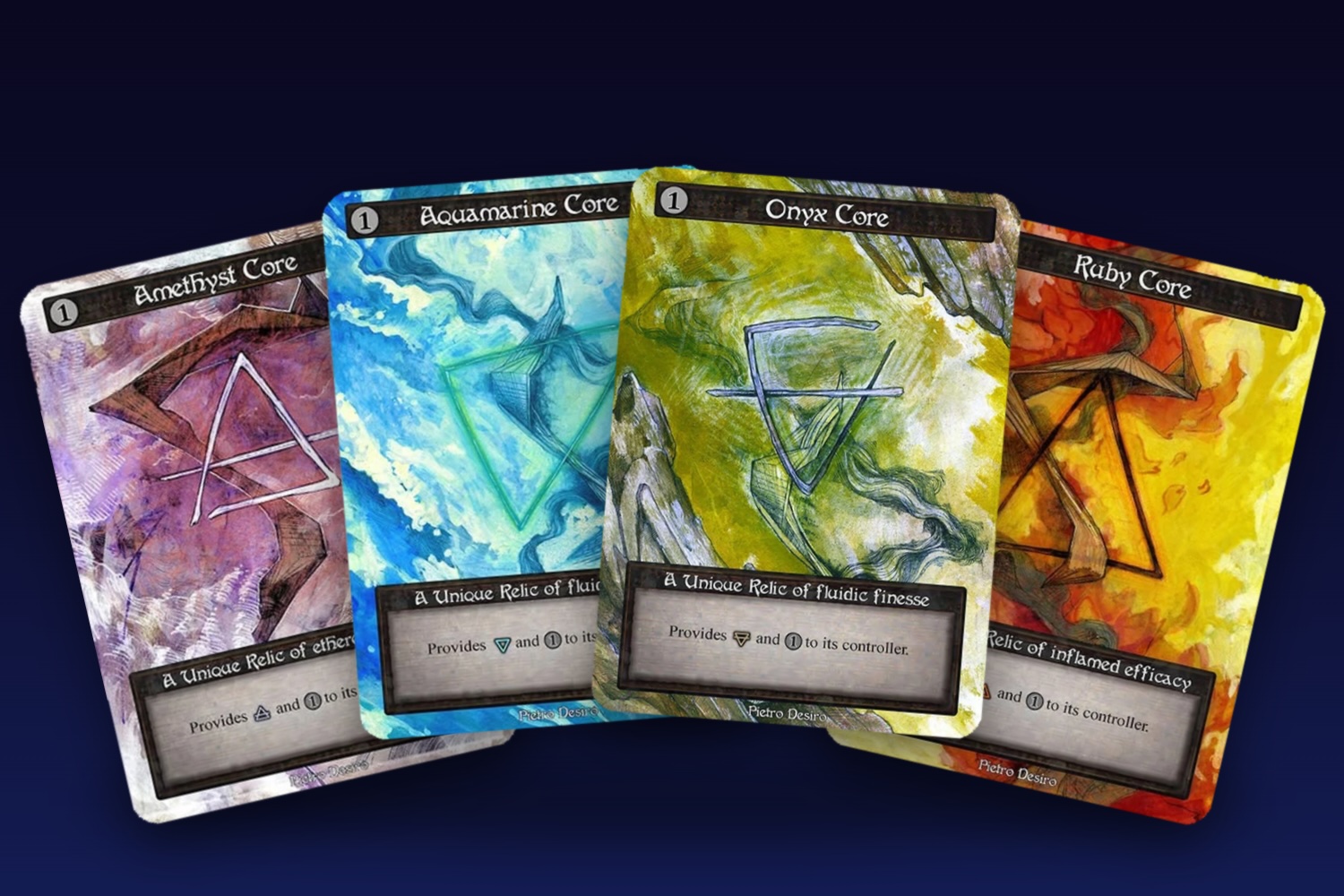
Amethyst Core, Aquamarine Core, Onyx Core and Ruby Core altered by Pietro Desirò for Siege at the Core 2024.
Last year you painted five more artifacts as prize support, each with lots of details. Can you share some thoughts on those pieces?
For the second edition of Siege at the Core, we decided to keep the tradition of ultra-spicy artefacts as prize support. We ended up with the Ring of Morrigan, Philosopher’s Stone, Amulet of Niniane, Four Waters of Paradise, and Kythera Mechanism.
This was a great opportunity to explore something new and exciting: painting jewellery, which I’d never really done before.
During the sketching phase, I was still considering whether to place the objects within a more defined scene, but ultimately decided to stick with the idea of freeing them from any direct relationship with space.
The most challenging one to conceptualise was the Ring of Morrigan. At first, I kept trying to design a fancy, elaborate ring, but something wasn’t clicking. Eventually, I moved towards something that felt more dangerous and fragile, and that’s when it started to come together.
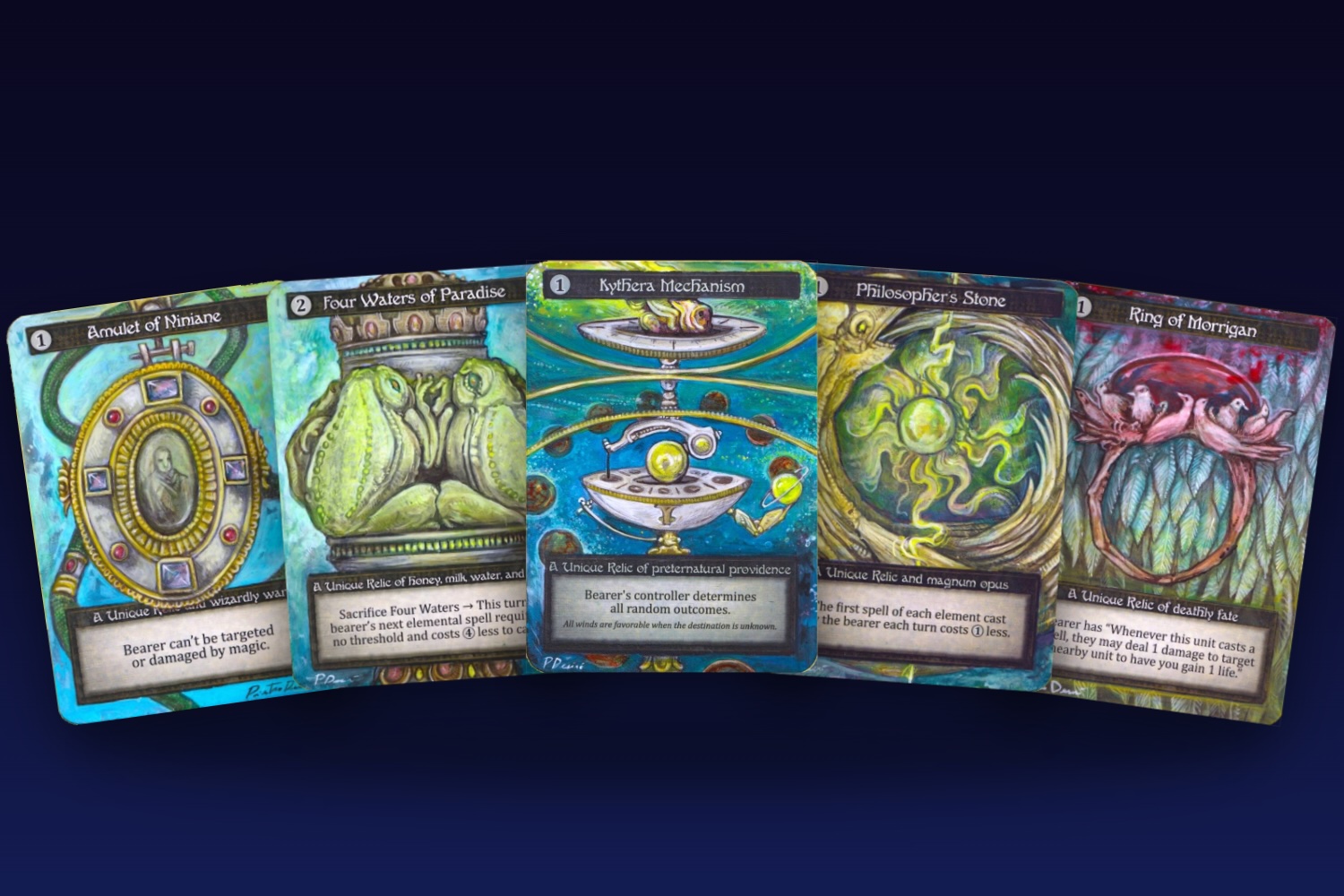
Amulet of Niniane, Four Waters of Paradise, Kythera Mechanism, Philosopher’s Stone and Ring of Morrigan altered by Pietro Desirò for Siege at the Core 2025.
What can the players expect from this year’s alters?
And here we are! When we started talking about the third edition of Siege at the Core, we naturally began looking for a powerful artefact cycle connected to Gothic. The Omphalos cycle immediately came to mind, but something wasn’t clicking for me.
Seagrave’s versions were too deeply ingrained in my mind at the time, and I struggled to imagine a different approach. I also wanted to explore something new.
Luckily, Gothic gave us plenty of powerful card cycles to choose from, and it didn’t take long to settle on the Archangels: Gabriel, Michael, Raphael, and Samael!
I’m sticking to my roots for this one. Living in Florence means being surrounded by art, religious iconography, and statues at every turn. I’ve been looking closely at late-medieval and early-Renaissance artists such as Giotto, Masaccio, and Brunelleschi for inspiration.
As I write this, I’m still in the sketching phase, but I can already tell this is going to be an exciting cycle to work on.
I hope you’ll like them.
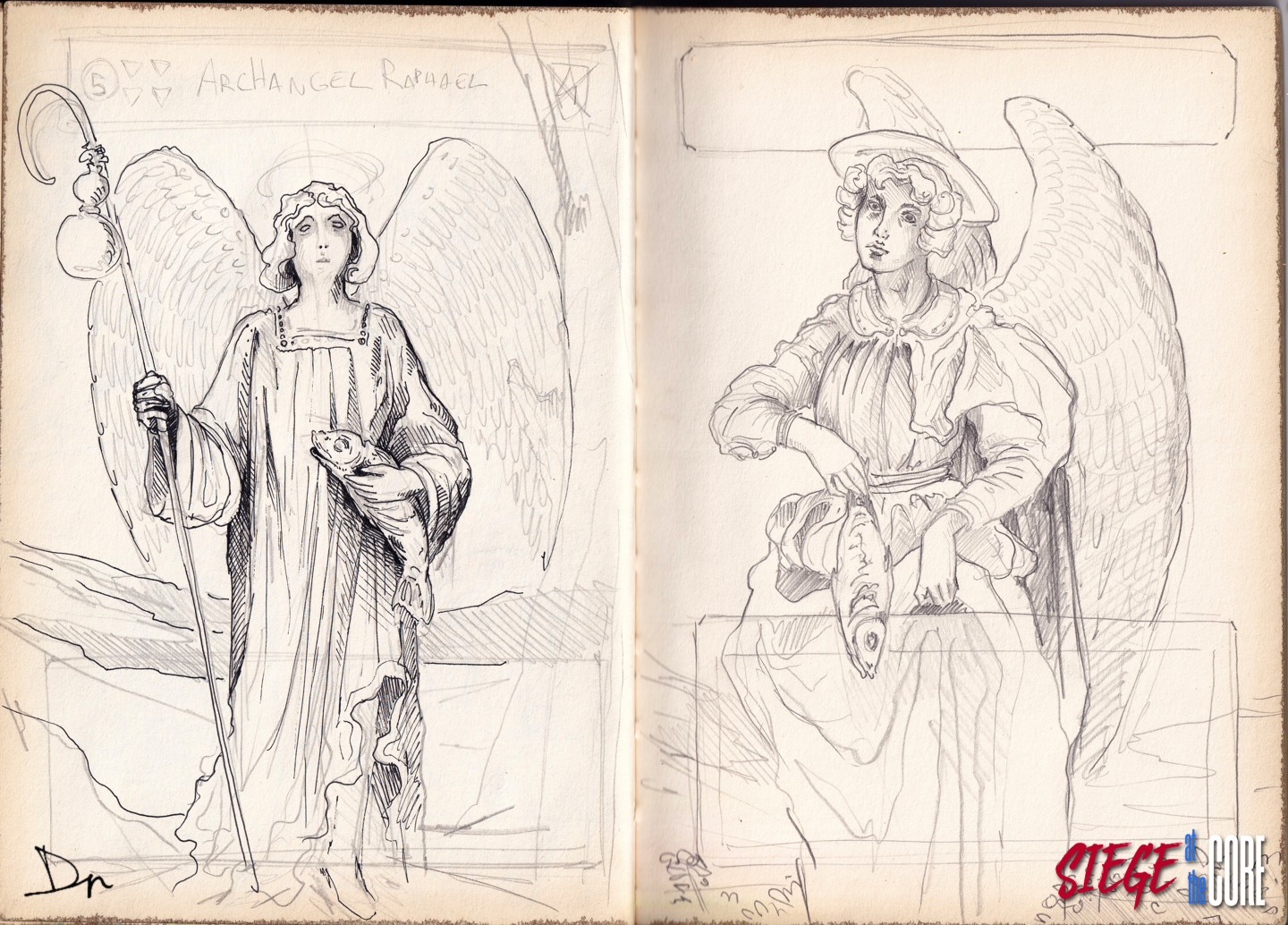
Pietro’s sketches for Archangel Raphael, one of the four Archangel alters for Siege at the Core 2026.
Pietro in Zaventem
Pietro is at Quartier Papier all weekend, playing, painting, and selling his alters and accessories.
Check out Pietro’s work on his Instagram page, @desiro_tcg, or watch some of his alters come to life on his YouTube channel.
The four Archangels go to the top four of Saturday’s Grand Contest. Want to play for one? Register for Siege at the Core.